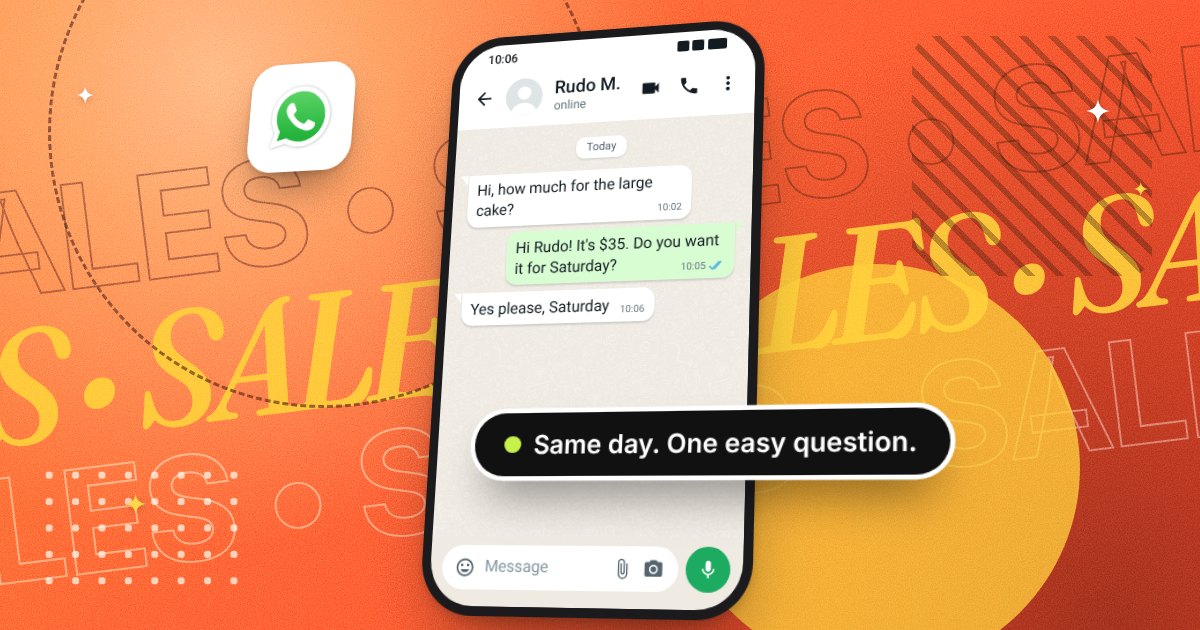
Reply with the price the same day, ask one easy question, and write down every open chat with a next follow-up date.
Reply with the price the same day, ask one easy question in the same message, and write down every open chat with a stage and the date you will follow up. That is the whole fix. A chat that goes quiet is often not a no. It may have slid under newer messages and nobody wrote down who was waiting.
01Where the enquiries actually go
A quiet chat is a WhatsApp conversation where someone asked for a price, got your answer, and then stopped replying.
The first conversation is not the problem. A customer writes "How much is this?" or "Is it still available?", you answer, and then it goes quiet. A few days later you are handling dozens of similar chats and cannot remember who wanted a quote and who was going to confirm.
One practical guide for African small businesses describes the same pattern. Relying on memory works with five active customers and becomes unreliable with fifty. Important chats disappear beneath newer ones, and the owner assumes the person was not interested when nobody followed up.
WhatsApp shows you the newest chat first, not the likeliest buyer. Someone who asked for a price on Monday can end up under a pile of delivery questions by Wednesday.
02What a quiet chat costs
Here is an example. I am making these numbers up, so use your own.
Say you sell cakes through WhatsApp, and 40 people ask for a price in a month. About 16 of them go quiet after you answer. Your average order is $35.
- 16 quiet chats at $35 is $560 sitting in conversations nobody is looking at.
- If a good follow-up brings back 1 in 4, that is 4 orders, or $140 a month.
- Over a year that is $1,680, from people who already asked you for a price.
Your numbers will differ. The people in those chats already know what you sell and already wanted it enough to ask. You do not have to find them. You only have to remember them.
03Reply the same day, and ask one easy question
Speed matters most at the first message. A customer who asks for a price and hears nothing for a day may have bought from the next shop by the time you reply.
Send the price, then ask one question that is easy to answer. Not "Are you interested?" Something like "Do you want it for Saturday or later in the week?" Wassenger says two questions is the ceiling, because more than that reads like a form. I would keep it to one.
If you do not know the price yet, say when you will. "I will send the price by 3pm today" is better than silence.
04Write down every open chat
You do not need software for this. A spreadsheet with a few columns is enough. The same guide suggests a list like this: name, phone number, what they are interested in, date of the last conversation, current stage, next follow-up date and notes.
The stage column does the most work. Keep it short and use your own words. A salon might use "Asked about service", "Appointment offered" and "Booked". A shop might use "Asked price", "Price sent", "Waiting on them", "Paid" and "Closed".
The sheet only works if someone opens it. A basic list reviewed every morning beats a perfect template that nobody touches.
05Follow up with a reason
"Just checking in" gives the customer nothing and makes them restart the conversation. A follow-up with a reason is easier to answer. The item is back in stock, or your Saturday slot has opened.
A message from Wassenger's guide to following up on WhatsApp, after a quote has gone unanswered, reads like this: "Hi Marta, checking in on the quote I sent you. Does the scope look right, or should I change something?" It has no apology and one clear question.
06How long to wait
There is no single right number, and only one of the two sources gives any.
- For a new question, Wassenger says to answer within the hour. I say within the hour if you can, and the same day at the latest.
- For a follow-up, Wassenger suggests 3 days after a quote, 7 days if the customer said they need to check with someone, and next morning if they said yes but have not paid.
- Its advice for a chat that went quiet is 3 days, then 10, then stop.
- The pctechmag guide gives no number of days. It ties the follow-up to the next action and the reason behind it.
Wassenger calls its intervals recommendations, not laws. My own view is to pick a rule you will actually keep. A same-day answer and a follow-up three days later that you really send beats a clever schedule you forget. Change the gap for what you sell. A cake for Saturday needs a nudge sooner than a sofa.
07Know when to stop
After two follow-ups with no reply, send one last friendly message and leave it. Wassenger's version is short: it says you will not keep filling their phone and they can write whenever it makes sense. Then mark the chat closed in your sheet. An answer, even a no, is better than an open loop, and you keep your name as someone who is easy to buy from.
08Questions owners ask
How fast should I reply when someone asks for a price?
Within the hour if you can, and the same day at the latest. Wassenger's own table says "within the hour" for a new question. If you do not know the price yet, tell them when you will send it.
How many times should I follow up before I stop?
Twice. Wassenger's suggestion for a quiet chat is 3 days, then 10, then stop, with one last friendly message after the second follow-up. It calls those gaps recommendations, not laws. My own view is to change them for what you sell.
Do I need special software to keep track of open chats?
No. The pctechmag guide says a spreadsheet gives a small team enough structure without much cost or complexity. It suggests a list that includes name, phone number, what they asked about, date of the last conversation, stage, next follow-up date and notes. Open it every morning.
09What to do this week
- 01Open WhatsApp and scroll back 30 days. Write down every person who asked for a price and has not bought or said no.
- 02Put them in a sheet with columns for name, what they asked about, last message date, stage and next follow-up.
- 03Send each of them a message with a reason and one easy question. Start with the ones from the last 7 days.
- 04From today, reply to every price enquiry the same day and set the next follow-up date before you close the chat.
- 05Spend 10 minutes each morning on the sheet. Send whatever is due.
Once the customer says yes, the order itself can slip, which I cover in how to stop orders falling through the cracks. To see which chats turned into money, read what a weekly report should show an owner.
Start with the sheet. It costs nothing. If the sheet becomes a job in itself, my services page shows how I help with that.
Keep reading
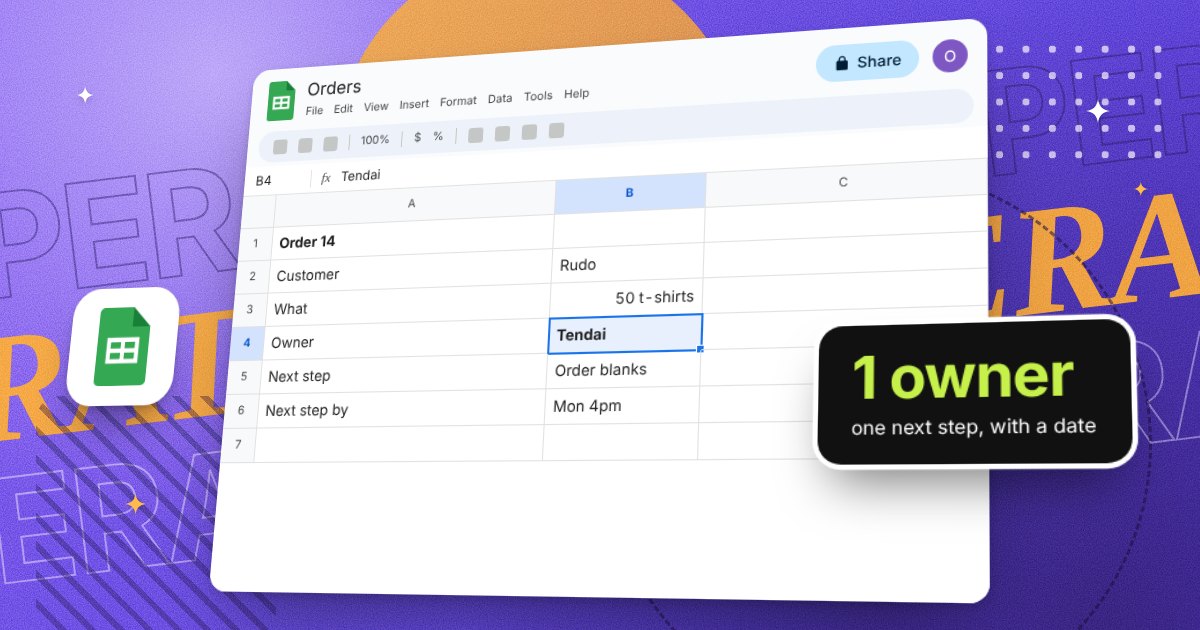
How to Stop Orders Falling Through the Cracks
Give every order one line in one shared place, with one named owner and a dated next step. Here is the sheet, and an example order that nearly got lost.
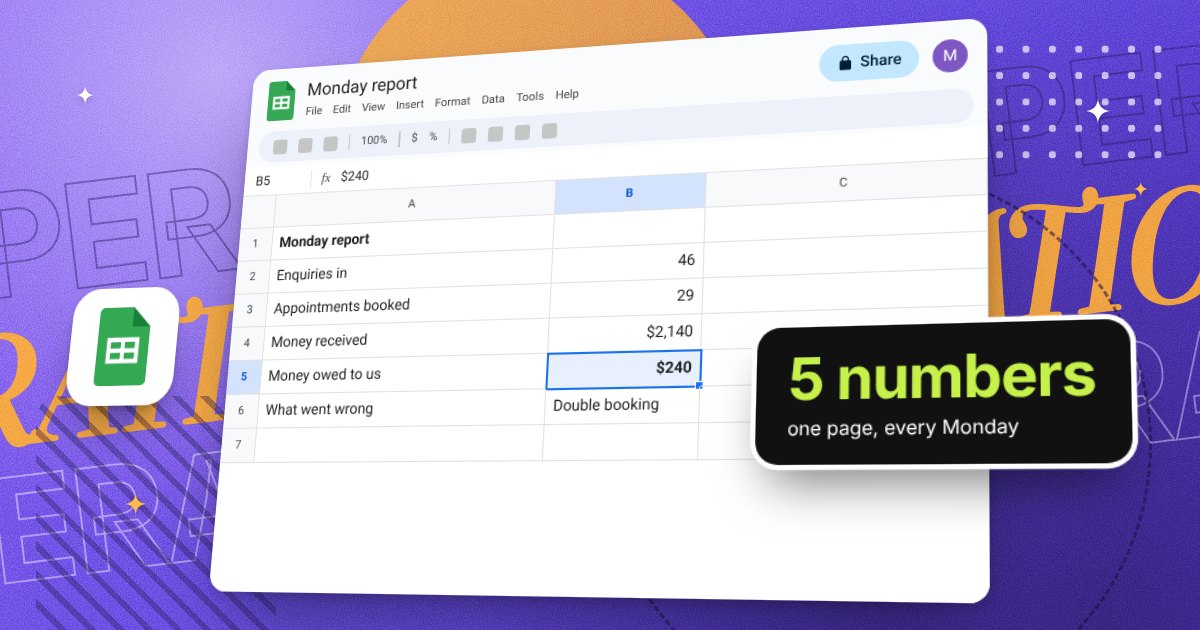
What Should a Weekly Report Show an Owner?
Five numbers on one page, the same every week. Here is the page, filled in for an example salon, and what the owner does after reading it.
One useful email a week
What is working in real businesses right now, written for owners. No spam, and one click to leave.
We only use your email to send the newsletter. See the privacy policy.
Want this working in your business?
Book a free 15 minute call and we'll tell you where AI can pay off for you. No pitch.
Book a Free Call