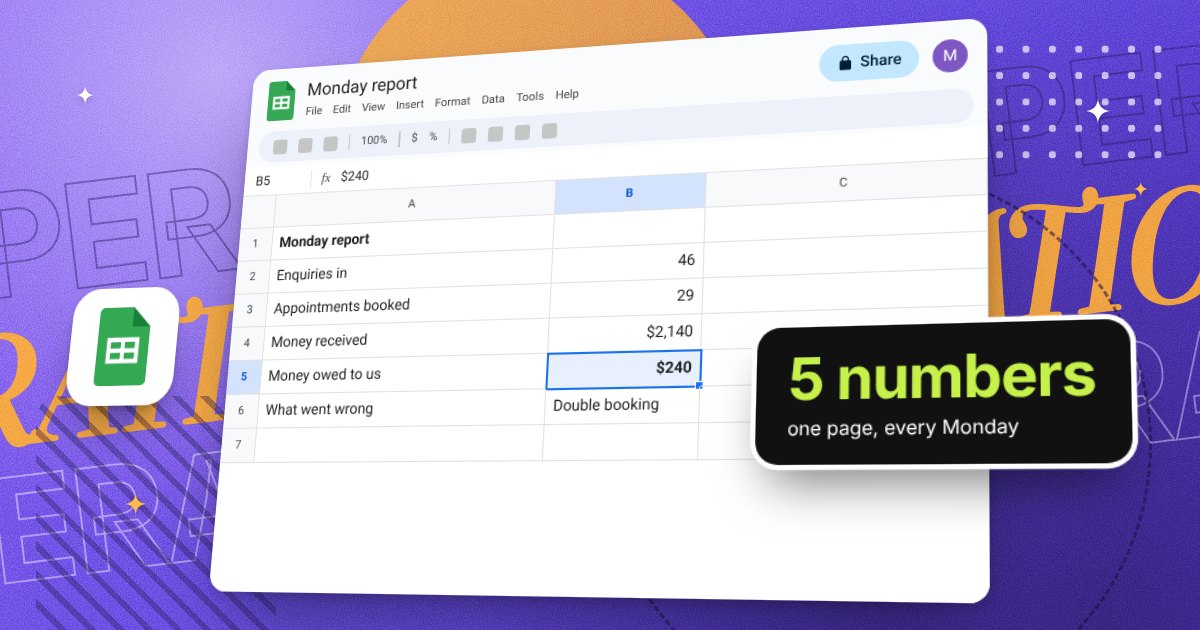
Five numbers on one page, the same every week. Here is the page, filled in for an example salon, and what the owner does after reading it.
A weekly report should show five things on one page, the same five every week: enquiries in, jobs or orders won, money received, money owed to you, and the one thing that went wrong. If a number does not change a decision, leave it off.
There are two ways to get this wrong. You see no numbers at all and run the business on feel, or you keep a huge spreadsheet that nobody opens. Both fail the same way. The owner makes next week's decisions without knowing how this week went.
01The five numbers
Each one answers a question you would otherwise guess at.
- Enquiries in. How many people asked for something this week, by message, call or walk-in. This is your future. If it drops, fewer jobs follow.
- Jobs or orders won. How many of those enquiries became work. Divide this by the first number and you know whether you are losing people after they ask.
- Money received. Cash and transfers that actually arrived, not invoices raised. An invoice raised is not money in the bank.
- Money owed to you. The total unpaid, and the age of the oldest item. It tells you whether the cash you are owed is growing or being collected.
- What went wrong. One sentence, in plain words. A customer lost, a mistake, a delay. If nothing went wrong, write "nothing".
Everything else you could track is a candidate for the bin. Followers and website visits are fine to look at now and then. They only earn a place on this page if you can say which decision they change.
02What it looks like for a four-chair salon
The salon below is made up, and so are the numbers. I use it to show how little space this takes. Say the owner is Nyasha, and the report is written on Monday morning for the week before. Prices are in US dollars.
Week of 5 to 11 October
- Enquiries in: 46 (last week 52)
- Appointments booked (the salon's jobs won): 29 (last week 33)
- Money received: $2,140 (last week $2,360)
- Money owed to us: $240 from 3 clients ($80 each), the oldest 12 days (last week $90, the oldest 4 days)
- What went wrong: two clients were booked for 11:00 on Saturday. Both waited 40 minutes and one left. (Last week: nothing.)
Here is how Nyasha reads it.
- 29 booked out of 46 enquiries is about 63%. Last week was 33 out of 52, also about 63%.
- So the share of people who book has not changed. What fell is the number of people asking, from 52 to 46.
- Money received fell by $220, which fits fewer bookings.
- Money owed rose from $90 to $240, and the oldest item is now 12 days old.
- The double booking on Saturday cost her a client.
That is five minutes of reading, and it gives Nyasha three clear jobs for the week. She does not need to look anywhere else.
03What the owner does after reading it
First, the fall in enquiries. The booking share held steady, so the first job is more people asking. Nyasha posts her free Thursday and Friday slots on her WhatsApp status on Tuesday morning, and she checks the enquiry number again next Monday to see if it moved.
Second, the $240. She sends a short message to each of the three people who owe, today, and writes the date next to each name. A message like "Hi Chipo, just a reminder about the $80 from your visit last Tuesday. You can send it by transfer or pay on your next visit" is enough.
Third, the double booking. Two people took bookings from two different chats, and neither could see the other's diary. She moves every booking into one shared diary and agrees that nothing is confirmed until it is written there. My post on stopping lost price enquiries on WhatsApp deals with the same habit of keeping things in chats.
04Who writes it, and how long it takes
Someone other than the owner should compile it. If you do it yourself it will be the first thing you drop when the week gets busy. Pick the person who already touches the numbers, the receptionist, the office manager, the person who does the banking. Give them 30 minutes on Monday morning, no more.
Tell them exactly where each number comes from.
- Enquiries: count the new chats and calls from the week, from your WhatsApp and phone log.
- Jobs or orders won: count the diary or order sheet.
- Money received: your bank, mobile money and cash book for the week.
- Money owed: your list of unpaid invoices or tabs.
- What went wrong: ask the staff on Friday afternoon. Write down the first thing they say.
If it takes more than 30 minutes, the problem is not the report. It means the numbers live in too many places, and fixing that is worth doing anyway. If you want an outside pair of hands to set it up, that is the kind of work on my services page.
05Keep it honest
A report only helps if it is the same every week. Do not change the five numbers in the first two months, even if you think of a better one. You need a few weeks of the same page before the pattern shows.
Once a quarter, look at each number and ask: did this change a decision in the last three months? If not, swap it for something that would. This is how you stop the page growing into a spreadsheet nobody opens.
If you also want to know what your own time is worth when you read it, that sum is here.
06What to do this week
- 01Write the five headings on one sheet of paper or one tab of a spreadsheet.
- 02Fill in last week's numbers yourself, once, and note how long it takes and where each number came from.
- 03Pick the person who will fill it in from next Monday, and give them the source list.
- 04On Monday, read it for five minutes and write down one decision for each number that moved.
- 05Put it next to last week's page, and keep every page in the same place.
The first page will be rough. By the fourth you should start to see what moves from week to week.
Keep reading
How to Stop Orders Falling Through the Cracks
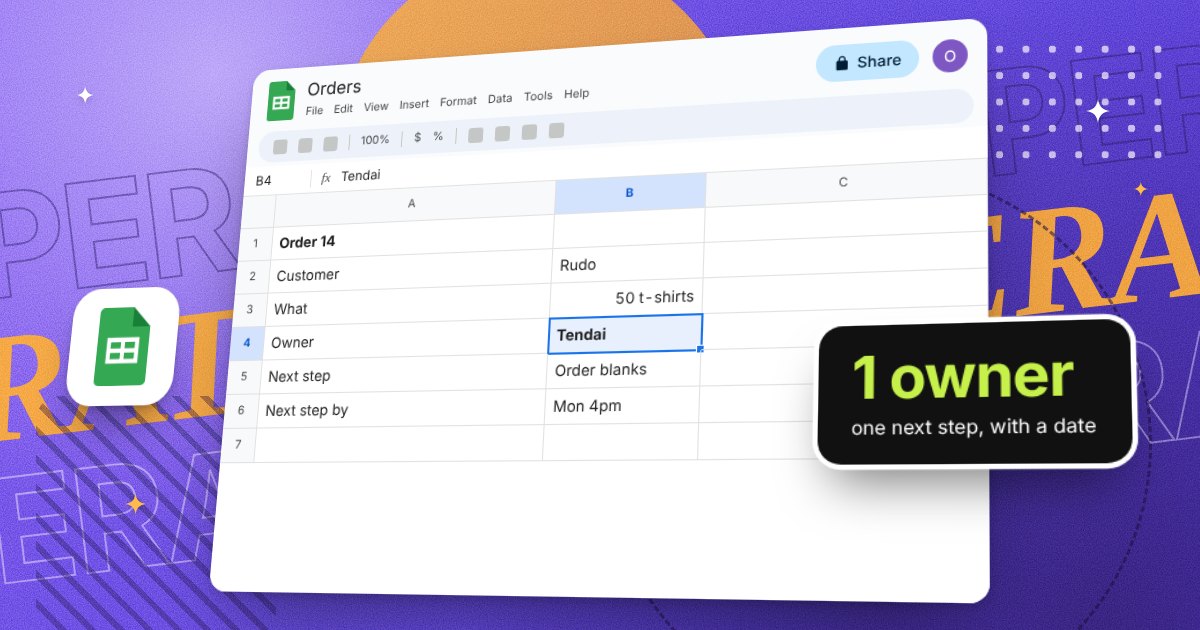
Give every order one line in one shared place, with one named owner and a dated next step. Here is the sheet, and an example order that nearly got lost.
What Is an Hour of Your Time Actually Worth?
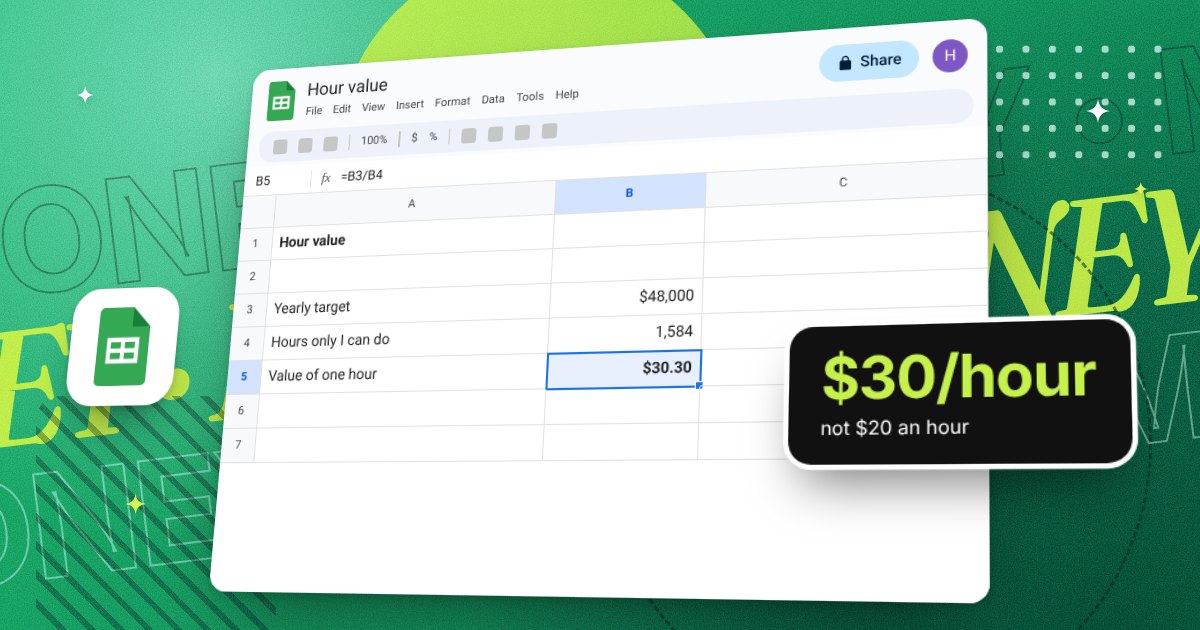
Divide what you need to earn by the hours only you can do. The number is higher than you think, and it tells you what to hand off first.
One useful email a week
What is working in real businesses right now, written for owners. No spam, and one click to leave.
We only use your email to send the newsletter. See the privacy policy.
Want this working in your business?
Book a free 15 minute call and we'll tell you where AI can pay off for you. No pitch.
Book a Free Call